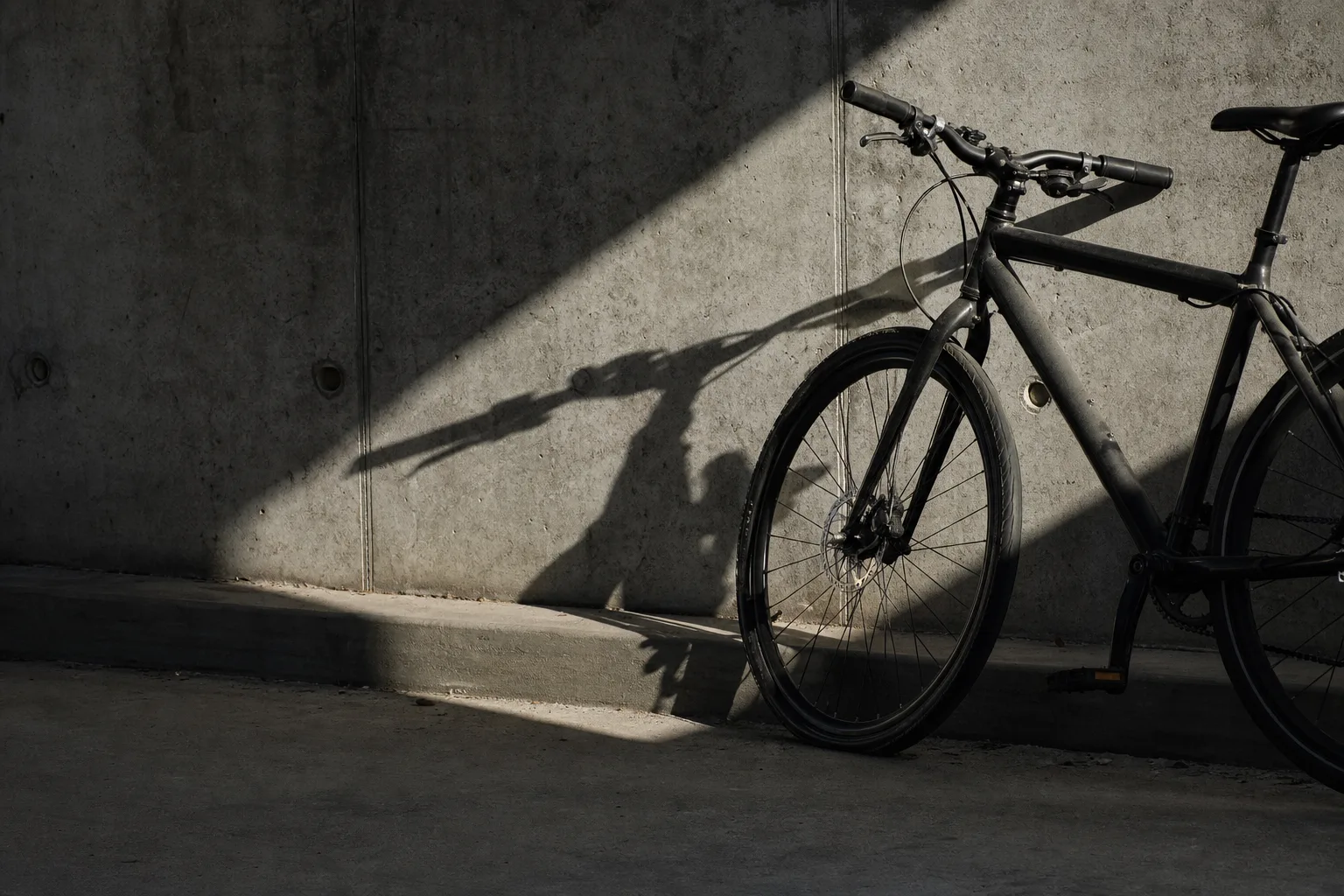
A walk through the flat-bar all-rounder category from the outside in, built from shop visits, test rides and a few years of owning one. Written so the next person can skip the guesswork.
The bike that gets ridden three times and then leans against the wall usually fits badly in one specific way, and the owner never finds out which way, because the discomfort arrives as a vague dislike rather than a diagnosis. Numb ring and pinky fingers, a hot spot under one sit bone, a lower back that aches after twenty minutes: each of those has a different cause and a different fix, and the fixes cost anywhere from nothing to about the price of a decent tire. Sorting them apart is mostly a matter of knowing what to compare against what.
The parking lot loop against the actual test ride
Most people test a bike by riding a circle behind the shop, standing on the pedals once, and pronouncing it comfortable, which tells you the brakes work and nothing else. A useful test ride lasts long enough for your hands to report in, which is fifteen minutes at minimum and better at half an hour, and it includes the surfaces you actually ride: a rough shoulder, a curb cut, a hill you have to grind up seated. Ask to take it further than the block. A shop that says no is telling you something. A shop that hands you a helmet and a phone number is telling you something else, and the second kind is worth driving to.
What you are comparing is not one bike against another so much as the same bike against itself at two saddle heights and two bar positions. Bring a multitool or ask the shop to move things while you wait. Ride, come back, raise the saddle five millimeters, ride the same loop again. The difference between a fit that works and one that nags is often smaller than the adjustment range already built into the seatpost and the stack of spacers under the stem, so the information you want is sitting there for free.
What the shop fitting covers, and where it stops
A basic sizing at the counter sets saddle height off your inseam, checks that you can straddle the top tube, and squares the bars. That is real work and worth having, and on a flat-bar all-rounder it gets most riders close. What it does not cover is reach, which is the distance from saddle to grips, and reach is the single thing most often wrong on a bike bought off the floor. Frame sizes come in three or four steps; torso and arm lengths do not. The Consumer Product Safety Commission oversees how bicycles are built and sold in this country, but no regulation makes a size medium match your particular back.
The lever for reach is the stem, the short piece of metal clamping the bars to the fork steerer. Shops keep a box of takeoffs, and swapping a 90mm for a 70mm, or flipping a stem to raise the bar an inch, is a ten-minute job with a hex wrench. A stretched-out back and weight dumped onto the palms are usually the same problem seen from two ends, and shortening reach or raising the bar solves both at once, where wrist braces and padded gloves only manage the symptom.
Saddle width against saddle padding
Soreness under the seat gets treated with softness, which is backward. A wide gel saddle spreads load onto tissue that was never meant to carry it, while a firmer saddle of the correct width lets the two sit bones, the bony points at the base of the pelvis, do the job. Width is measurable: many shops have a foam pad or a gel tray you sit on to read the spacing, and the saddle you want is that measurement plus roughly twenty millimeters. Compare on that number rather than on how it feels squeezed in the hand, and try the shop's demo saddle program if one exists.
The pressure sticker against the road you ride
The number molded into the tire sidewall is a maximum, not a recommendation, and on a 38mm or 45mm tire the maximum is far above anything useful. Running twenty psi below it, then lower again if the ride still feels harsh, takes the sting out of chip seal and gravel without making the bike slow. Heavier riders need more, lighter riders less, and the rear carries more than the front. Drop pressure ten psi at a time across a week of the same commute and the right number announces itself.
Change one thing at a time, ride the same loop, and write down what you did. Three weekends of that gets a bike you stop noticing, which is the whole point.